• BOSU® World Headquarters

  • Workshops and Events

  • Balance for Children and Autism

Showing posts with label sports. Show all posts

The Versatility of Swimming

Energizes the young. Reinvigorates the elderly. Competitive sport. Leisurely pastime. Indoor activity. Outdoor adventure. Part of therapeutic rehabilitation. Core of intense training regimen.

Swimming engages a broad spectrum of people with varying backgrounds in pursuit of varying objectives. Swimming is a versatile and an age-old pastime. It’s been around for as long as there have been bodies of water and the versatility of the sport suggests that it will be an undisputed favorite for ages to come (unlike those sports like wrestling that are subject to disputes and debates). The sport is still being revitalized: swimming experienced a bit of a shake up when some people took it upon themselves to take underwater moves to a new level. Remember that phase in 2013 when everybody started dancing to the Harlem Shake? You can dance; er, move erratically, under water as the Ball State swim team proved during the Harlem Shake craze.


Swimmers and their tricks. They should stick with flips and backstrokes and leave the dance moves to the pros.

Why is dancing so popular? Well, that answer is going to differ from person to person. However, there are benefits to swimming regardless of whether the people engaging in the sport realize it or not.

The key to swimming might be body size. Of course there is more than one way to open a door, as burglars well know, but bells and whistles such as keys do make the whole process a lot smoother. This fun infographic details the body size of swimmers. The trend is: taller is better. We all know that Michael Phelps is a towering giant and have heard the legends about his dinner plate sized hands. Both he and Nathan Adrian certainly don’t disprove this theory.


A swimmers body tends to have a little more mass than, say, a runner’s body because the water supports their bodies. Is balance a concern for swimmers at all? It seems as if all they need is to have enough balance to know which direction they are going and emphasis is better placed on power and momentum.

A Norwegian study took a look at mini-swimmers: babies. The study compared babies that were exposed to swimming earlier to those that were not. They resolved that the babies who took swimming lessons had improved balance compared to those who did not. The goals of this study were more closely aligned with an interest in the development and maturation of children than creating children with superior athletic prowess but it does speak to the link between balance and swimming.

For older swimmers, the proper techniques of swimming are reliant on the premise that the swimmer has balance control. Without training, it is natural for a swimmer to swim through the water with the hips submerged at a depth lower than the shoulders and head. While this is the natural reaction when first placed in the water this habit creates drag and resistance for the swimmer. It is better if the swimmer raises the lower torso, hips and legs so that they are parallel with the shoulders and surface of the water. It is not natural and requires conscious focus and balancing skills for those who are new to the sport.

Training with the BOSU® Balance Trainer leads to a stronger core, increased trunk control, and improved balance. For the competitive or leisurely swimmer, from the high school athlete to the Olympian powerhouse, a taller build might be key to having natural talent, but that talent can only be unlocked with diligent training.

If you’re looking for training to compliment your swim workouts, try the BOSU® Balance Trainer. I would recommend that you use it as a dry land workout. The swim world was shaken up enough with underwater Harlem Shakes.

Harlem Shakes go underwater.

BOSU® Balance Trainer workouts stay above ground.

This entry was contributed by Stephanie Berger, a Public Relations and Marketing intern at Hedstrom - Ball, Bounce and Sport. She studies at the University of South Carolina and is addicted to breakfast foods and sunshine.

Make Your Tailgating Snacking a Touchdown

Fall is here, which means one thing: FOOTBALL SEASON IS IN FULL SWING. I’m Ohio born and raised and a recent graduate of The Ohio State University, so you can guess who my team is.

On any given Saturday you can find me watching football on the couch, at a bar, sitting in the stadium cheering on my Buckeyes, or one of my favorites….tailgating.

There’s nothing better than stadium parking lots fired up with team spirit on a fall Saturday with friends, family and of course, delicious food. I don’t know about you, but after hours of continuous snacking on greasy, unhealthy, fried food, I feel like I should go run a marathon…but I’m so full I can’t move.

I’m here to tell you that you CAN enjoy football Saturday and all its yummy snacking without the guilt! Using some of these easy tailgating snack swaps for the next big game will leave you cheering in the end zone!

SWAP

- Burgers for chicken sandwiches

- Pork bratwurst for turkey bratwurst

- Queso dip for pico de gallo

- Queso for guacamole or hummus

- Fried snacks for baked

- Big bowls of dips for individual servings

- Mayo and sour cream for yogurt or Greek yogurt

- Full fat cheese/milk for low fat products

- Buns and bread for whole wheat tortillas or lettuce wraps

- Tortilla chips for whole wheat pita chips or veggies

- Cookies and brownies for delicious, fresh fruit skewers with dip

- Alcoholic beverages for flavored water, iced tea or 100% fruit juice

It’s also really easy to sit for the entire game (which can sometimes be up to 4 hours.) So instead of becoming a couch potato or permanently stuck in your lawn chair, try some of these fit tailgating tips to stay active during the game.

TRY

- Standing instead of sitting for the whole game

- Passing a football, Frisbee or baseball during halftime

- Playing corn hole during the game (only if you have the game on TV close by obviously!)

- Do a push up/sit up competition with your friends every time your team scores

Tailgating shouldn't leave you feeling guilty because of the mass amounts of potato skins and chicken wings you consumed. You can still have a great time cheering on your team while enjoying delicious and HEALTHIER snacks!

Try out some of my personal favorites for smarter game day snacking:

Skinny Southwest Chicken Dip


Buffalo Chicken with Skinny Ranch


Fruit Skewers with Vanilla Honey Yogurt Dip


Happy snacking! And of course, GO BUCKS!

This blog post was contributed by Allie Squires, a PR and Marketing intern with Hedstrom-Ball Bounce & Sport. She recently graduated from The Ohio State University with a degree in Strategic Communications and thinks dogs are better than cats. 

Training for Football

Football season is upon us. Americans wait the whole year for the distinct smells that combines aromas of crisp fall, new pigskins, wet grass, booze, and hot chocolate. We’re so enthused that we follow football at every competitive level: from peewee to high school to pro.  One team is never enough. One football game never satisfies. We always come back begging for more.

The roar of the stadiums will soon be drowning out any intelligible thoughts as the two teams have spent months preparing come face to face. One team will emerge victorious. Player motivation, coaching decisions, fan support, talent, and not least of all training will determine who will rise as victor.

The time and diligence spent repeating drills, weightlifting, and bulking up pay off in the stadium. The imposing figure of a football player leads an outsider to believe that most time spent strength training and packing on the muscle; balance also is an integral, if less obvious, part of a football team’s training regimen. For obvious reasons, players need to be in tune with their bodies. Incidentally, balance training is shown to reduce chances of ankle sprains. While balance training is incorporated during rehabilitation for athletes who sprain an ankle, it is worthwhile for trainers to be proactive and incorporate training that will reduce chances of sprains occurring in the first place. To achieve balance training objectives trainers will design workouts using the BOSU® Balance Trainer. Don’t believe it? Check out some of the informational clips on the web (like this one) that people have made for football players.

Or if you want real, authentic proof straight from the pros, I’ll redirect to your attention to these shots that have been floating around cyberspace of the Steelers.

Questioning the power of balance? I’ve seen these people on the field. I have enough faith in the powerful combination of their balance, stability, and power to know that I wouldn’t want to be caught standing in front of them.

During football season I cheer from the sidelines or from the safety of my living room with firm confidence that balance training leads a team to have poise and stability that will make certain that their opponents on the field will be in for one wild ride.

This entry was contributed by Stephanie Berger, a Public Relations and Marketing intern at Hedstrom - Ball, Bounce and Sport. She studies at the University of South Carolina and is addicted to breakfast foods and sunshine.

Racing is a Sport

"NASCAR isn't a true sport. All you do is sit in a car all day."

Ryan Ellis, part-time driver in both the NASCAR Camping World Truck Series and NASCAR Nationwide Series, disagrees with that statement.

For those who have never experienced what it is like inside a race car, it is difficult to understand the demanding physical and mental strength, as well as the endurance, that is required: “You don’t perform at peak potential, mentally or physically, when you’re worn out. By being in better shape, you are able to perform at your best [for a longer period of time] than everyone else,” said Ellis.

This is why it is important for drivers, just like football players, baseball players, and the like, to train and eat properly to prepare for a race.

How exactly does one prepare to go 200 mph for 3 hours?

According to Ellis, one of the most important aspects of a driver’s training is cardio.

This can include boxing workouts and running every day of the week. It also helps to play another sport—Ryan Ellis, for instance, plays hockey—at least once a week to stay in shape.

Ellis added that he also lifts “weights with a few other drivers, namely Tanner Berryhill, Austin Reed, and another friend three or four times a week.”

Another crucial part of training for a NASCAR race is working out your core, especially because of the “wear and tear” a driver endures on the track, said Ellis.

A tool often used to intensify core workouts is the BOSUⓇ Balance Trainer, and it can also increase balance: “When doing boxing workouts on the speed bag, we use it for balance. I prefer to use it at the end of my workouts for general core workouts,” Ellis said.

While physical training is important, there’s another piece of the puzzle to keep in mind when preparing for a race: nutrition.

Protein and carbohydrates are a driver’s best friends.

Ryan Ellis noted that “during the week, I try and keep a high protein diet for my lifting and bringing carbohydrates in to fuel the workouts.”

Carbohydrates especially, said Ellis, help drivers get through some of the longer races on the NASCAR schedule.

Right before a race, however, it’s best not to get too creative with your meals or have too much to eat because the heat you experience in the car can make you sick. A typical pre-race meal for Ellis is pasta with chicken or a salad.

During the race, a driver has to stay hydrated. After all, water is essential for survival. The heat in a race car can make a driver dehydrate easily and quickly, which can cause headaches, lightheadedness, and confusion—none of which are ideal for racing as focus behind the wheel is vital.

While drivers need to drink plenty of water and watch what they eat, they don’t deprive themselves of the occasional cheat meal. Ellis, for example, loves Chipotle.

All in all, drivers need to train and eat just like, what some might consider, “normal” athletes because driving nearly 200 mph for 3 hours in a race car that reaches over 100-degrees in the cockpit is not an easy task.

Ryan Ellis, who has played hockey in college and baseball, said that NASCAR “is by far the most wearing on the brain and body.”

Some people believe racing is easy, but I’m in agreement with Ellis… Racing is both a mentally and physically taxing sport—yes, I said sport.

This blog entry was contributed by Adena Siefert, a PR and Marketing Intern at Hedstrom – Ball, Bounce and Sport. She recently graduated from Ashland University with degrees in Sport Communication and Public Relations. She gets very upset if she misses a NASCAR race on TV.

8 Fitness Activities to Add to Your Bucket List

The CrossFit craze has taken the United States by storm in the past decade. Membership is still steadily increasing and brands like Reebok are coming out with lines of apparel expressly designed for CrossFitters. CrossFit competitions further suggest that CrossFit is not going to loosen the firm hold that it is has gained in the fitness arena.

You can’t deny that CrossFitters are enthusiastic and dedicated to what they do, but their enthusiasm for what they do is not unique. Take a look at these trends that have acquired just as devoted and enthusiastic a following. Some you may be familiar with and others are just starting to take off.

1. Parkour

Parkour was developed in France in the ‘80s and comes from the French term “parcours” which translates to “course” in English. It was developed as a movement that allows the practitioner to be able to naturally respond to the environment around him with agility and flexibility. The athletes are referred to as traceurs and will typically vault, jump, run and climb through obstacles found in urban locations. Don’t assume this sport is strictly for youth. Traceurs of any age can be found leaping over obstacles in the park.


2. Bossaball

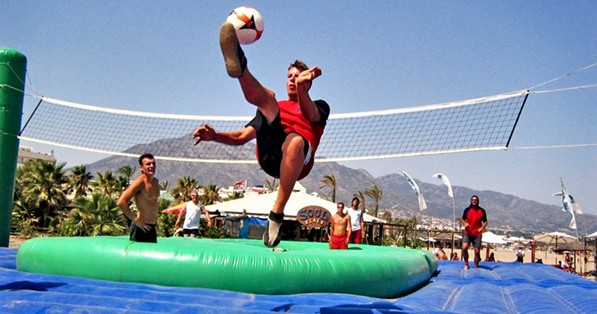
This high-intensity sport was developed in 2004 by a Belgian living in Spain. Think trampoline, beach volleyball and soccer all rolled into one. It has barely been one decade since its inception, but it nevertheless has gathered such wide support that organized competitive matches have been established around Europe and Central and South America.

3. Retro-Walking

There are those individuals that like to walk. (Some get up early to walk to the end of the driveway to retrieve a morning newspaper. Some take a walk after dinner with the dog. Some spend lunch strolling through the park.) But have you ever thought of walking backwards? In China and Japan, walking backwards through the park isn’t unheard of. As crazy as strolling around town backwards may seem, there are studies that say that walking backwards does have benefits and can reduce joint pain.

If nothing else walking backwards does give a unique perspective of life. Check out this artist who filmed Tokyo walking backwards. Who knew?

4. Obstacle Course Racing

Spartan Races. Mud runs. Obstacle races aren’t new and they certainly aren’t unheard of. But this certainly isn’t your typical run-of-the-mill fitness trend and is worthy of being added to a bucket list for those who have yet to take the plunge and enter one. The old-fashioned community 5K goes ten steps further with a series of challenging obstacles that only the strongest can get through. This is NOT for the timid. If you’re up for the challenge go ahead and take the plunge. Register for the next one held in your community. While you’re signing up, check out this guide expressly designed for prepping for a Spartan Race.

5. Hot Yoga

Hot yoga has gained traction for those looking for a more intense approach to yoga. Yoga is performed in rooms that are heated up to 105° F. The high temperatures and humidity of the rooms will rapidly raise your heart rate and tire out your muscles. The increased heat also provides people with the opportunity to feel more flexible. While it has recently gained popularity, the debates continue to persist on whether or not it is beneficial.
6. Capoeira

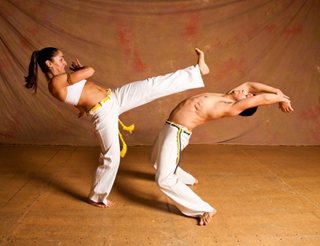
This is a Brazilian martial art that has been around for several centuries and was used by slaves to practice fighting. The music served as way to disguise it as a dance without detection from slave overseers. After watching captivating combination of acrobatics, dance, and rhythm, it is understandable why the centuries-long fascination with capoeira has persisted into modern day.

7. HIIT


High-intensity interval training. These workouts incorporate several short high-intensity repetitions with recoveries in between. These workouts are thought to be more effective at increasing a particular athletic ability because of the focus on intensity. This has become a fan favorite not just because it is touted for increasing metabolism and burning through fat at faster rates, but also because of the short workout duration. What’s not to like? More effective workout and less time…I’ll take it.


8. Unicycling

Okay. Maybe this isn’t new. Maybe it’s not a trend. But who says it can’t be made into a trend? After all, how many people are confident in their skills on a unicycle? Join the others dedicated to this one-wheel peculiarity and start a movement. I’m not an expert, but it’s hard to imagine how scooting around town on a unicycle wouldn’t do wonders for your core muscles and coordination.

This blog was contributed by Stephanie Berger, a Public Relations and Marketing intern at Hedstrom - Ball, Bounce and Sport. She studies at the University of South Carolina and is addicted to breakfast foods and sunshine.

The Most Epic Fail of the Tour de France Lives On


The pictures with the BOSU® Balance Trainer attracted my attention and caused me to pause in my feed; however, what captivated me wasn't the allure of the shiny blue but rather the description of who was using the BOSU. If you haven’t recognized him yet, I’ll reveal who the hunky-looking guy in the picture is. This is Lance Armstrong. Caught in the act of training.

Granted this tantalizing piece of information came from an article that was posted a year before the whole debacle with Armstrong blew up. Otherwise it might not have been as casually written. And granted even people that dope have to train if they want to compete at top levels. If I or my neighbor engaged in performance enhancing activities we might get a leg up on the other neighbors, but I am convinced that neither one of us would be able to cycle around France. Even though it is hard to escape the irony, it isn’t that I’m surprised by the fact that there exists photographic evidence of him training at all.

What got my attention and caused me to sit back and ruminate were the feelings of disappointment that resurfaced.

Everybody loves the story of the underdog. Especially in America, our ability to identify with and root for the underdog is a part of our DNA. Our history began when a small group of pilgrims left an established country to start a new one. Triumphant stories born out of the Great Depression era were noticed by inquisitive film producers and some, like Sea Biscuit and Cinderella Man, made it to the big screen in front of throngs of adoring moviegoers. Our news has been peppered with political figures like Nelson Mandela and athletes like Gabby Douglas who have overcome the odds to surpass rivals that were initially favored by society to be more successful. The world loved Lance Armstrong not just for surviving a bout with cancer but for persisting and driving his athletic career to where he became one of the most successful cyclists in the world.

It is a hard fall when you find out that somebody that you closely identified with had another side.

It has been two years since Lance Armstrong tumbled from hero to antihero. His charity foundation, Livestrong, severed his ties and he found that sponsors and their endless pots of gold directly correlate to the ratings of your media image. You have those who will be forever infuriated by his actions and you have those writing books and quietly nudging that the issue of doping in cycling was and is bigger than Lance Armstrong. The Tour de France is nearing its 101st finish and radio talk show hosts and other sports commentators are still throwing around Armstrong’s name as the prime example when discussing the connection between cycling and its drug culture.

It has also recently been revealed that there might be outlets for him to reconnect in some manner with Livestrong. If that isn’t an option, he wants to start another foundation.

This undoubtedly will evoke varying responses. I think about the distaste that still surfaces whenever I recall Lance Armstrong, much like the instance when he showed up in my newsfeed. The thing is, Armstrong is moving forward with his life. It might be time that I stop expecting more and acknowledge that, even though the loss of his mansion, fortune and world titles haven’t rendered a less arrogant Armstrong stooping to proffer the world a more genuine apology, I can accept what happened and move on. While the inherent drug culture should by all means continue to attract attention and actions that will change it, I can accept that Lance Armstrong isn’t the athlete I and the world thought him to be. But if he has genuine interest and desire to move forward and make his mark by impacting those fighting with cancer and other cancer survivors, he should go ahead and do so. He might have failed his athletic career, but he still won life.

Don’t lose heart. The underdogs are still out there and I for one will still always support them. Because believe it or not genuine fighters still exist. They do whatever it takes to overcome the odds. They are a rare find and some do fall short. But our history shows that not only are they worth believing in but that they walk among us: unaware that one day they will come out on top. The unassuming might be the best kind of underdog, because they never back down and they never cave.

This entry was contributed by Stephanie Berger, a Public Relations and Marketing intern at Hedstrom - Ball, Bounce and Sport. She studies at the University of South Carolina and is addicted to breakfast foods and sunshine.

When Halftime Becomes Movetime

There is a game celebrated by people ranging from the mountains of Peru, the stadiums of privileged East Coast prep schools, the cities of India and the plains of Russia. Those scrappy matches in dusty lots and back street alleys only come to a pause for one event every four years that glorifies match after match. The one event that soccer fans everywhere have been waiting on for four years is almost over.


The 2014 World Cup thus far has had its share of suspense, expected upsets and thrilling victories. In between the bitter debates over penalties and the colorful excitement of Brazil, there are other points of intrigue that have been less exposed to the public eye. Japan has long gone home, but soccer fans should take note of what Japanese midfielder Shinji Kagawa was training with.

Since the The BOSU® Balance trainer can be used to promote balance and a stronger core—both of which are essential traits for a pro athlete—his trainers had a bigger goal in mind than for him to just mimic the form of an inept pole-vaulter. While the entire Japanese soccer team was caught red-handed with BOSU® Balance trainers, it isn’t a training device exclusively for the professional athlete.

article-0-1DEF070F00000578-615_634x435.jpg
Balance and strength are just as essential for the rest of us in society that haven’t been blessed with the skills to competently direct a ball where we want it to go. Some do have the tendency to inflate assessment of his or her own individual soccer skills (sort of like turning the volume of the radio up to the point where you can’t hear yourself screaming yet are still able to persuade yourself that you are singing in key). However, few would argue that they couldn’t use more of a tune-up in their fitness routines. The pros are in Brazil and we are drooling over their every move. Some of us openly admit we couldn’t tell a ball was coming at us let alone make contact, others showoff at weekend club games with their own speed and style, and the rest of us are watching the games only because somebody roped us in. Even though we don’t share the same moves, we are going to pursue the training methods that the pros use. Because who doesn’t want better balance and a stronger abdomen?

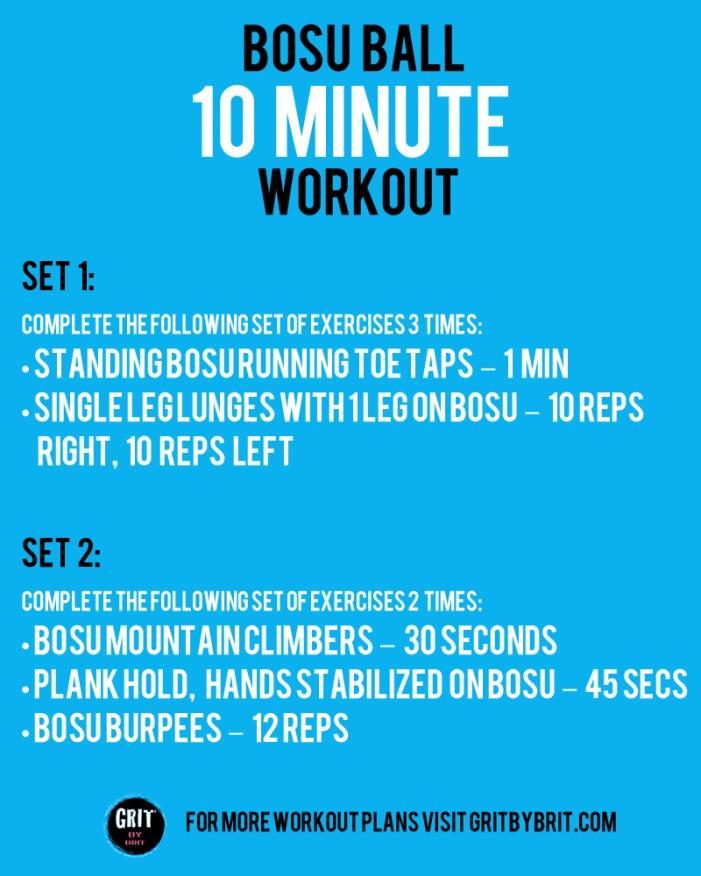
Kagawa was having the time of his life on his BOSU® Balance trainer at practice. Fortunately, we don’t have to be Kagawa to lug a barbell to the middle of a stadium to hone our bodies. Pick out a spot in front of your TV during the remaining matches and complete this 10 minute workout by #GRITbyBrit.

So just how many matches remain? And how many minutes of workouts would that make? I’ve never been mistaken for being an elite athlete, but I’m ready to switch up my routine of running to the kitchen for snack refills. There has got to be a better way for me to cope with the suspense than eating it all away.

Halftime? Bring out the BOSU. I’ve got some abs of steel just waiting for me to dust them off.

This blog was contributed by Stephanie Berger, a Public Relations and Marketing intern at Hedstrom - Ball, Bounce and Sport. She studies at the University of South Carolina and is addicted to breakfast foods and sunshine.

Popular Posts