It is easy to forget about stretching or choose to skip stretching as a way to shorten workout time. Skipping your stretching might save you time in the short term, but it leads to a higher chance of pulled muscles or other injuries that could hinder you from training or exercising. Taking shortcuts at the expense of stretching is not the road you want to take.
If you’re looking for a generic stretching regiment to loosen up tight muscles be sure to check out just a few of the ways you can stretch out on the BOSU® Balance Trainer. Be sure to educate yourself or talk with a trainer about stretching that is right for you and your training routines. Or, if you already know, don’t give into the temptation of skipping your sessions.
Happy stretching. May the power of flexibility be ever on your side.
This entry was contributed by Stephanie Berger, a Public Relations and Marketing intern at Hedstrom - Ball, Bounce and Sport. She studies at the University of South Carolina and is addicted to breakfast foods and sunshine.
Energizes the young. Reinvigorates the elderly. Competitive sport. Leisurely pastime. Indoor activity. Outdoor adventure. Part of therapeutic rehabilitation. Core of intense training regimen.
Swimming engages a broad spectrum of people with varying backgrounds in pursuit of varying objectives. Swimming is a versatile and an age-old pastime. It’s been around for as long as there have been bodies of water and the versatility of the sport suggests that it will be an undisputed favorite for ages to come (unlike those sports like wrestling that are subject to disputes and debates). The sport is still being revitalized: swimming experienced a bit of a shake up when some people took it upon themselves to take underwater moves to a new level. Remember that phase in 2013 when everybody started dancing to the Harlem Shake? You can dance; er, move erratically, under water as the Ball State swim team proved during the Harlem Shake craze.
Swimmers and their tricks. They should stick with flips and backstrokes and leave the dance moves to the pros.
Why is dancing so popular? Well, that answer is going to differ from person to person. However, there are benefits to swimming regardless of whether the people engaging in the sport realize it or not.
The key to swimming might be body size. Of course there is more than one way to open a door, as burglars well know, but bells and whistles such as keys do make the whole process a lot smoother. This fun infographic details the body size of swimmers. The trend is: taller is better. We all know that Michael Phelps is a towering giant and have heard the legends about his dinner plate sized hands. Both he and Nathan Adrian certainly don’t disprove this theory.
A swimmers body tends to have a little more mass than, say, a runner’s body because the water supports their bodies. Is balance a concern for swimmers at all? It seems as if all they need is to have enough balance to know which direction they are going and emphasis is better placed on power and momentum.
ANorwegian study took a look at mini-swimmers: babies. The study compared babies that were exposed to swimming earlier to those that were not. They resolved that the babies who took swimming lessons had improved balance compared to those who did not. The goals of this study were more closely aligned with an interest in the development and maturation of children than creating children with superior athletic prowess but it does speak to the link between balance and swimming.
For older swimmers, the proper techniques of swimming are reliant on the premise that the swimmer has balance control. Without training, it is natural for a swimmer to swim through the water with the hips submerged at a depth lower than the shoulders and head. While this is the natural reaction when first placed in the water this habit creates drag and resistance for the swimmer. It is better if the swimmer raises the lower torso, hips and legs so that they are parallel with the shoulders and surface of the water. It is not natural and requires conscious focus and balancing skills for those who are new to the sport.
Training with theBOSU® Balance Trainer leads to a stronger core, increased trunk control, and improved balance. For the competitive or leisurely swimmer, from the high school athlete to the Olympian powerhouse, a taller build might be key to having natural talent, but that talent can only be unlocked with diligent training.
This entry was contributed by Stephanie Berger, a Public Relations and Marketing intern at Hedstrom - Ball, Bounce and Sport. She studies at the University of South Carolina and is addicted to breakfast foods and sunshine.
The thing we must do to be able to pay our taxes, bills, and for the occasional vacation.
Mondays are the worst. You come in, tired, and can’t wait for the day to eventually be over.
Wednesdays give you hope. You are halfway through the week—surely you can make it to Friday.
That’s right… FRIDAY. The best day of the work week. Usually, the day flies by because of your anticipation of the much-needed weekend.
But the time from Monday to that much-needed weekend often drags on and on.
If you are in a job position where you are constantly on the go, then the weekend might appear sooner than you thought it would.
However, if you are in a job position that has you cooped up in a cubicle all week long, then chances are boredom occasionally strikes.
Hey, that’s okay! I’ve learned that staring at a computer screen all day because I’m reading, writing, and researching is a lot more mentally exhausting than it may seem.
Boredom is often brought on by the acknowledgement that you need a break, but you have no idea what to do. Sure, you can check your social media accounts to see if any of your friends have tagged or shared content with you, but, in the end, you’re still looking at a computer (or phone) screen.
Take a real break and try to overcome your boredom.
Here’s what I suggest:
But keep in mind, you should only allow yourself a couple of breaks throughout the day—you still have a job to do, after all! That’s why it’s important to make your breaks count.
I hope these help with your boredom!
This blog entry was contributed by Adena Siefert, a PR and Marketing
Intern at Hedstrom – Ball, Bounce and Sport. She recently graduated from
Ashland University with degrees in Sport Communication and Public
Relations. She enjoys swimming and eating trail mix.
Perhaps you can relate when I say that grace and agility does not run in my family.
It was hours past the end of a family reunion feast and leftovers were being stored away in a refrigerator in the basement. I walked to the top of the staircase and looked down to see an explosion of atomic orange gelatinous chunks and white goo splattered on the staircase landing. The remnants of the orange Jell-O marshmallow dessert were everywhere, but the person who been carrying them was nowhere to be seen. I rushed down and saw a trail leading to the side where my grandma was bent over. She saw me and started to moan. I rushed her to a chair and started to wipe her down with washcloths.
For what each individual of my family lacks in the grace and agility department, they more than compensate for with their acute sniffing abilities. Noses in my family serve two functions: locating hidden desserts and ferreting out embarrassing mishaps. Sure enough, momentarily there was a stampede of footsteps coming through the stairwell and nine noses, and nine pairs of beady eyes peered down over the staircase banister.
My grandma peeked out from under the washcloth she was holding to her forehead and started to shake. Tears started rolling down her cheeks amidst the marshmallow streaks. The eyes on the staircase started frantically looking back and forth at each other. Then a hiccup of sound escaped from the washcloth and was followed by a roar of laughter. The eyes brightened as everybody else started to laugh with relief.
The youngest cousin on the staircase piped up: “Grandma, you really should enroll in tumbling classes with me!”
My grandma wholeheartedly agreed.
This episode brought to my attention the importance of fall prevention training techniques and balance training. Nobody would claim that being active isn’t an important part of anybody’s lifestyle, especially as a person ages.
There is an abundance of research confirming that regular exercise is important to the health and well-being of seniors. But just what exactly are the best methods for doing so? Maybe, as my cousin suggested, you or the older adult in your life could think about signing up for a tumbling class. But if tumbling isn’t your thing, you could try out the following ideas to incorporate regular exercise:
8. Check out stability exercises from Super Betty!
Regular exercise will have so many benefits: increased energy, better blood circulation, improved sleep habits, reduced pain, and increased independence. If nothing else, regular exercise that incorporates balance training should reduce the chances of grandma somersaulting down the staircase with dessert.
This entry was contributed by Stephanie Berger, a Public Relations and Marketing intern at Hedstrom - Ball, Bounce and Sport. She studies at the University of South Carolina and is addicted to breakfast foods and sunshine.
Devoting time to exercise is crucial to a person’s physical and mental wellbeing. But that time devoted to exercise is limited. Why not make the most of it? The determining factor in how effective your workout is lies in your approach to working out and how you utilize that precious workout time. That age-old question of quantity vs. quality applies to your workout routines. It isn’t necessarily a question of how long you work out but how you work out that determines your success. If you need a workout switch-up and want a break from workout volume, try incorporating High Intensity Interval Training (HIIT) into your routine.
Spend less time exercising. Burn fat quicker. Finish with a more effective workout.
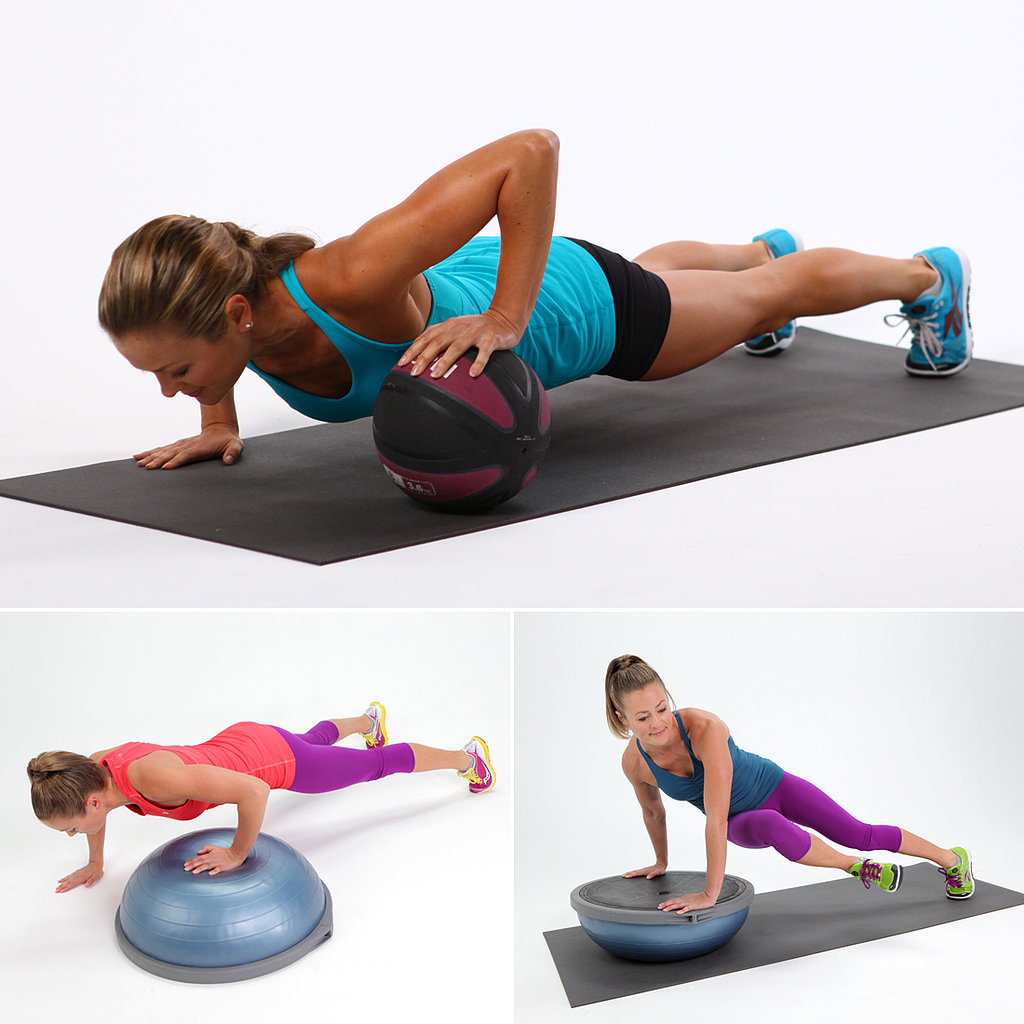
Or try this workout and complete it in 30 minutes. Perform each exercise for one minute at high intensity. At the end of five, rest for one minute. Repeat the circuit five times.
Hip abduction
Lunge
Trunk rotation
Bicycle
Dome pushup
This entry was contributed by Stephanie Berger, a Public Relations and Marketing intern at Hedstrom - Ball, Bounce and Sport. She studies at the University of South Carolina and is addicted to breakfast foods and sunshine.
Posted on Wednesday, September 03, 2014 by Unknown
Football season is upon us. Americans wait the whole year
for the distinct smells that combines aromas of crisp fall, new pigskins, wet
grass, booze, and hot chocolate. We’re so enthused that we follow football at
every competitive level: from peewee to high school to pro.One team is never enough. One football game
never satisfies. We always come back begging for more.
The roar of the stadiums will soon be drowning out any
intelligible thoughts as the two teams have spent months preparing come face to
face. One team will emerge victorious. Player motivation, coaching decisions,
fan support, talent, and not least of all training will determine who will rise
as victor.
The time and diligence spent repeating drills,
weightlifting, and bulking up pay off in the stadium. The imposing figure of a
football player leads an outsider to believe that most time spent strength
training and packing on the muscle; balance also is an integral, if less
obvious, part of a football team’s training regimen. For obvious reasons,
players need to be in tune with their bodies. Incidentally, balance training is
shown toreduce chances of ankle sprains. While balance
training is incorporated during rehabilitation for athletes who sprain an
ankle, it is worthwhile for trainers to be proactive and incorporate training
that will reduce chances of sprains occurring in the first place. To achieve
balance training objectives trainers will design workouts using the BOSU®
Balance Trainer. Don’t believe it? Check out some of the informational clips on
the web (like this one) that people have made for
football players.
Or if you want real, authentic proof straight from the pros,
I’ll redirect to your attention to these shots that have been floating around
cyberspace of the Steelers.
Questioning the power of balance? I’ve seen these people on
the field. I have enough faith in the powerful combination of their balance,
stability, and power to know that I wouldn’t want to be caught standing in
front of them.
During football season I cheer from the sidelines or from
the safety of my living room with firm confidence that balance training leads a
team to have poise and stability that will make certain that their opponents on
the field will be in for one wild ride.
This entry was contributed by Stephanie Berger, a Public Relations and Marketing intern at Hedstrom - Ball, Bounce and Sport. She studies at the University of South Carolina and is addicted to breakfast foods and sunshine.
This entry was contributed by Stephanie Berger, a Public Relations and Marketing intern at Hedstrom - Ball, Bounce and Sport. She studies at the University of South Carolina and is addicted to breakfast foods and sunshine.
Nobody ever said that workouts were supposed to be for the meek.
Nobody ever said that plastic balls were supposed to be for the weak.
I was intrigued by the assurances of the fliers in the gym that the 3D XTREME™ class session would combine together cardio, conditioning and core workouts all into one package. So I signed up. Yet I didn’t expect as much sweat to be coming out of my pores as all that did when I tried out my first 3D XTREME™ class.
The night of the class, I walked in, looked around, and thought, “I think I can manage this.”
I’ll spare the details, but manage I did. Halfway through the 50 minute session I started feeling like I had burnt enough calories to last me the rest of the week. I guess peer pressure does have its benefits because the only reason I finished was the 14 other participants in there kept going…I didn’t think I would be able to show my face back at the gym if I walked out of there defeated by plastic and rubber. At the end, all the social butterflies started excitedly rehashing the workout. I squeezed out a smile before I just barely was able to drag my body out the door and to my car across the parking lot.
After I recuperated, I reflected. I liked it. It’s not like I’ve never sweated before and it’s not like I’ve never had a good workout before, so it wasn’t unique in those regards. What I liked most was the functional combination that made me feel like I had done 3 different workouts in one day. So for my 50 minutes of high-intensity action, it was an effective workout. It doesn’t take much for me to sweat, but that workout was worth every drop of it.
This entry was contributed by Stephanie Berger, a Public Relations and Marketing intern at Hedstrom - Ball, Bounce and Sport. She studies at the University of South Carolina and is addicted to breakfast foods and sunshine.
The CrossFit craze has taken the United States by storm in the past decade. Membership is still steadily increasing and brands like Reebok are coming out with lines of apparel expressly designed for CrossFitters. CrossFit competitions further suggest that CrossFit is not going to loosen the firm hold that it is has gained in the fitness arena.
You can’t deny that CrossFitters are enthusiastic and dedicated to what they do, but their enthusiasm for what they do is not unique. Take a look at these trends that have acquired just as devoted and enthusiastic a following. Some you may be familiar with and others are just starting to take off.
1. Parkour
Parkour was developed in France in the ‘80s and comes from the French term “parcours” which translates to “course” in English. It was developed as a movement that allows the practitioner to be able to naturally respond to the environment around him with agility and flexibility. The athletes are referred to as traceurs and will typically vault, jump, run and climb through obstacles found in urban locations. Don’t assume this sport is strictly for youth. Traceurs of any age can be found leaping over obstacles in the park. 2. Bossaball
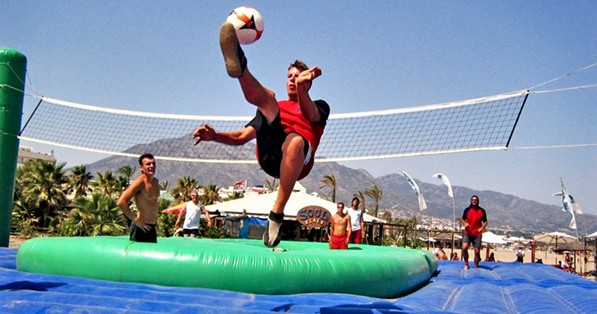
This high-intensity sport was developed in 2004 by a Belgian living in Spain. Think trampoline, beach volleyball and soccer all rolled into one. It has barely been one decade since its inception, but it nevertheless has gathered such wide support that organized competitive matches have been established around Europe and Central and South America.
3. Retro-Walking
There are those individuals that like to walk. (Some get up early to walk to the end of the driveway to retrieve a morning newspaper. Some take a walk after dinner with the dog. Some spend lunch strolling through the park.) But have you ever thought of walking backwards? In China and Japan, walking backwards through the park isn’t unheard of. As crazy as strolling around town backwards may seem, there are studies that say that walking backwards does have benefits and can reduce joint pain.
Spartan Races. Mud runs. Obstacle races aren’t new and they certainly aren’t unheard of. But this certainly isn’t your typical run-of-the-mill fitness trend and is worthy of being added to a bucket list for those who have yet to take the plunge and enter one. The old-fashioned community 5K goes ten steps further with a series of challenging obstacles that only the strongest can get through. This is NOT for the timid. If you’re up for the challenge go ahead and take the plunge. Register for the next one held in your community. While you’re signing up, check out this guide expressly designed for prepping for a Spartan Race.
5. Hot Yoga
Hot yoga has gained traction for those looking for a more intense approach to yoga. Yoga is performed in rooms that are heated up to 105° F. The high temperatures and humidity of the rooms will rapidly raise your heart rate and tire out your muscles. The increased heat also provides people with the opportunity to feel more flexible. While it has recently gained popularity, the debates continue to persist on whether or not it is beneficial.
6. Capoeira
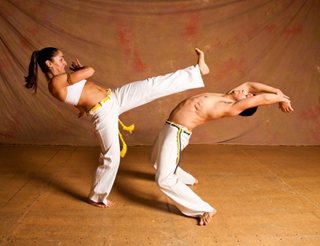
This is a Brazilian martial art that has been around for several centuries and was used by slaves to practice fighting. The music served as way to disguise it as a dance without detection from slave overseers. After watching captivating combination of acrobatics, dance, and rhythm, it is understandable why the centuries-long fascination with capoeira has persisted into modern day.
7. HIIT
High-intensity interval training. These workouts incorporate several short high-intensity repetitions with recoveries in between. These workouts are thought to be more effective at increasing a particular athletic ability because of the focus on intensity. This has become a fan favorite not just because it is touted for increasing metabolism and burning through fat at faster rates, but also because of the short workout duration. What’s not to like? More effective workout and less time…I’ll take it.
8. Unicycling
Okay. Maybe this isn’t new. Maybe it’s not a trend. But who says it can’t be made into a trend? After all, how many people are confident in their skills on a unicycle? Join the others dedicated to this one-wheel peculiarity and start a movement. I’m not an expert, but it’s hard to imagine how scooting around town on a unicycle wouldn’t do wonders for your core muscles and coordination.
This blog was contributed by Stephanie Berger, a Public Relations and Marketing intern at Hedstrom - Ball, Bounce and Sport. She studies at the University of South Carolina and is addicted to breakfast foods and sunshine.
The BOSU® Balance Trainer is an effective tool that is often utilized by a wide range of athletes and adults as part of a training routine. When using the Balance Trainer, your body is forced to recruit numerous core and stabilizing muscles in order to balance. This development of balance, core strength and coordination is important for even the most novice workout enthusiast.
Overlooked is the importance of developing all of those same skills in children. One additional benefit of using the BOSU® Balance Trainer, especially, for children, is its ability to encourage the engagement of something called the vestibular system. The vestibular system, while it sounds complicated, is basically responsible for helping us to maintain control and awareness of where our body is in space. This system also plays a behind-the-scenes role in stabilizing vision and balance.
With a growing number of children being diagnosed every day with conditions, such as Autism, sensory processing disorder, ADHD, etc., there is more and more awareness of the importance of the vestibular system. To put it simply, for an individual to respond appropriately to sights, sounds or even touches their vestibular system needs to be “turned on.” The common thread with many of the above diagnoses and learning disorders is a dysfunction of the vestibular system; thus, making it very difficult for these children to navigate basic everyday situations.
Many interventions for children use items like swings or trampolines to stimulate the vestibular system. The challenge is these methods only address input in one plane of gravity. As we go through daily life, none of us moves within one plane of space. Typical movement integrates all three planes: horizontal, vertical, and sagittal. The answer? The BOSU® Balance Trainer! The Balance Trainer is so versatile with the positions in when it can be used and the endless activities that can be safely performed that it is easy to provide the vestibular input needed in each plane.
The most appealing part of using the BOSU® Balance Trainer with children: it is really fun! Because of the myriad of safe activities, all of which have significant benefits, children can be creative and make up their own games using the Balance Trainer. Play with the BOSU® Balance Trainer is purposeful, meaningful, imaginative and, most importantly, FUN. The Balance Trainer activities have so many inherent benefits for children they should be a staple in every child’s play routine!
Written by: Kim
Partlow, MAOT CNFT
C.E.O. Neuro-Fit Systems, Inc.
David Weck, BOSU® Balance Trainer inventor once stated,
“I think the best place to put BOSU® is in the TV room.”
We love the BOSU®. We love our TV shows. Commercials...not so much love there. So, we’ve developed a fun workout routine that includes BOSU® in with your favorite shows! During the commercial breaks, be productive with some of these exercises! Share it with your friends!
The pictures with the BOSU® Balance Trainer attracted my attention and caused me to pause in my feed; however, what captivated me wasn't the allure of the shiny blue but rather the description of who was using the BOSU. If you haven’t recognized him yet, I’ll reveal who the hunky-looking guy in the picture is. This is Lance Armstrong. Caught in the act of training.
Granted this tantalizing piece of information came from an article that was posted a year before the whole debacle with Armstrong blew up. Otherwise it might not have been as casually written. And granted even people that dope have to train if they want to compete at top levels. If I or my neighbor engaged in performance enhancing activities we might get a leg up on the other neighbors, but I am convinced that neither one of us would be able to cycle around France. Even though it is hard to escape the irony, it isn’t that I’m surprised by the fact that there exists photographic evidence of him training at all.
What got my attention and caused me to sit back and ruminate were the feelings of disappointment that resurfaced.
Everybody loves the story of the underdog. Especially in America, our ability to identify with and root for the underdog is a part of our DNA. Our history began when a small group of pilgrims left an established country to start a new one. Triumphant stories born out of the Great Depression era were noticed by inquisitive film producers and some, like Sea Biscuit and Cinderella Man, made it to the big screen in front of throngs of adoring moviegoers. Our news has been peppered with political figures like Nelson Mandela and athletes like Gabby Douglas who have overcome the odds to surpass rivals that were initially favored by society to be more successful. The world loved Lance Armstrong not just for surviving a bout with cancer but for persisting and driving his athletic career to where he became one of the most successful cyclists in the world.
It is a hard fall when you find out that somebody that you closely identified with had another side.
It has been two years since Lance Armstrong tumbled from hero to antihero. His charity foundation, Livestrong, severed his ties and he found that sponsors and their endless pots of gold directly correlate to the ratings of your media image. You have those who will be forever infuriated by his actions and you have those writing books and quietly nudging that the issue of doping in cycling was and is bigger than Lance Armstrong. The Tour de France is nearing its 101st finish and radio talk show hosts and other sports commentators are still throwing around Armstrong’s name as the prime example when discussing the connection between cycling and its drug culture.
It has also recently been revealed that there might be outlets for him to reconnect in some manner with Livestrong. If that isn’t an option, he wants to start another foundation.
This undoubtedly will evoke varying responses. I think about the distaste that still surfaces whenever I recall Lance Armstrong, much like the instance when he showed up in my newsfeed. The thing is, Armstrong is moving forward with his life. It might be time that I stop expecting more and acknowledge that, even though the loss of his mansion, fortune and world titles haven’t rendered a less arrogant Armstrong stooping to proffer the world a more genuine apology, I can accept what happened and move on. While the inherent drug culture should by all means continue to attract attention and actions that will change it, I can accept that Lance Armstrong isn’t the athlete I and the world thought him to be. But if he has genuine interest and desire to move forward and make his mark by impacting those fighting with cancer and other cancer survivors, he should go ahead and do so. He might have failed his athletic career, but he still won life.
Don’t lose heart. The underdogs are still out there and I for one will still always support them. Because believe it or not genuine fighters still exist. They do whatever it takes to overcome the odds. They are a rare find and some do fall short. But our history shows that not only are they worth believing in but that they walk among us: unaware that one day they will come out on top. The unassuming might be the best kind of underdog, because they never back down and they never cave.
This entry was contributed by Stephanie Berger, a Public Relations
and Marketing intern at Hedstrom - Ball, Bounce and Sport. She studies
at the University of South Carolina and is addicted to breakfast foods
and sunshine.
On one of my first days of music school, a professor shared that when she performed, she felt like an athlete. Looking around the room at the awkwardly shy group of freshman students (including myself), it was hard to believe that. But the idea of being an athlete while performing was fascinating to me. There were so many similarities! Finding time to exercise is like a musician finding time to practice. It’s an equal struggle. We never want our bodies to forget how to do something, just like musicians don’t want to get to the performance and forget the notes. Here are a few things I learned from music school that help me live a healthier life.
Although we take this for granted, it’s important for both athletes and musicians alike to learn how to control our breathing. Musicians have to be conscious of where in their body to put the air they inhale. Some even do a thing called “circular breathing” and use exercises like trying to continuously blow bubbles into a cup with a straw to help make their breathing stronger. Learning how to breathe and when to breathe is a challenge, but there’s something about consciously deciding when to breath that helps improve any fitness routine including cardio workouts, weight training or yoga.
2. Yes, warming up IS important.
Warming up is essential to
both fitness fans and musicians (as are stretches!).
We’ve all heard stories about people who go too hard at the gym and end up hurting themselves because they lacked a good and proper warm up. The same risk exists for musicians. Maybe some people can get away with doing some exercises without a warm up, but there always seems to be a negative consequence. Every trainer and musician has their own opinion of what a “proper” warm up is. I had a professor tell me about his teacher who said if he hadn’t practiced all of the scales before noon, there was no point in getting his instrument out. Whatever warm up you choose, make sure it involves stretching. Maybe you stretch before you warm up! Don’t cop out of warm ups. Your body will thank you later.
A look inside Boston Symphony Orchestra's brass section warm up. Hilarious.
3. Rhythm is everything.
Running in rhythm Members
of I-75 Jazz Ensemble with Chris
Buzzelli, Roger Schupp, David Bixler, and Jeff
Halsey
“Uh one, uh two, uh one, two, stankety stank!” Any musician will tell you that rhythm is a fundamental aspect to learning music. Most beginning musicians have a tendency to rush through the easy parts of the music and try to tackle the more difficult passages too quickly. I see this at the gym too. Finding the pacing of the each piece or exercise is sometimes challenging. Start slow and easy and work your way to the more difficult exercises. My music teacher always challenged me to play every note absolutely correct at a slower pace instead of playing 80% of the notes correctly and having to slow down for 20% of them. Musicians use metronomes to help pick their pacing and to help regulate their rhythm. Creating a well thought out gym playlist has the same effect as a metronome and can really regulate your endurance of your workout.
4. Too much pain? Find another solution.
Alternatives to the push up
Two different interpretations of the Brahms FAE Sonata
In music, many soloists will play the same piece. However, they all sound different because no two soloists’ bodies (and minds!) are the same. Using different techniques to play the same notes is common in music. We know what we want to sound like, but depending on our own ability, it’s up to us on how to get there. The same can be said for exercising. Maybe I want to tone up my shoulders. I’ve struggled with push ups since my elementary days, but dumbbell chest presses are an alternative that is similar and considerably easier for me to do. Find what works for you to make your sessions more productive and more enjoyable.
5. If you don’t know how to do something, ask.
A trainer with their client Itzhak Perlman with a student
Sometimes in our workout/practice sessions, we come to a spot where we don’t know what to do. Puzzled, we ask ourselves, “How do I...?”, “What do I...?”, “Maybe if I…” because we just don’t know what to do! Maybe it’s a piece of exercise equipment, or maybe it’s a difficult passage. We can try it out, but we don’t really KNOW if we are doing it correctly. Ask someone how to do it and what its purpose is. People generally like helping each other. If you’re a trainer, teacher or maybe you’re just a bystander or the kid in the next practice room, try to have a pleasant attitude and be supportive. Someone’s asking you to explain something unknown to them. Introduce it kindly.
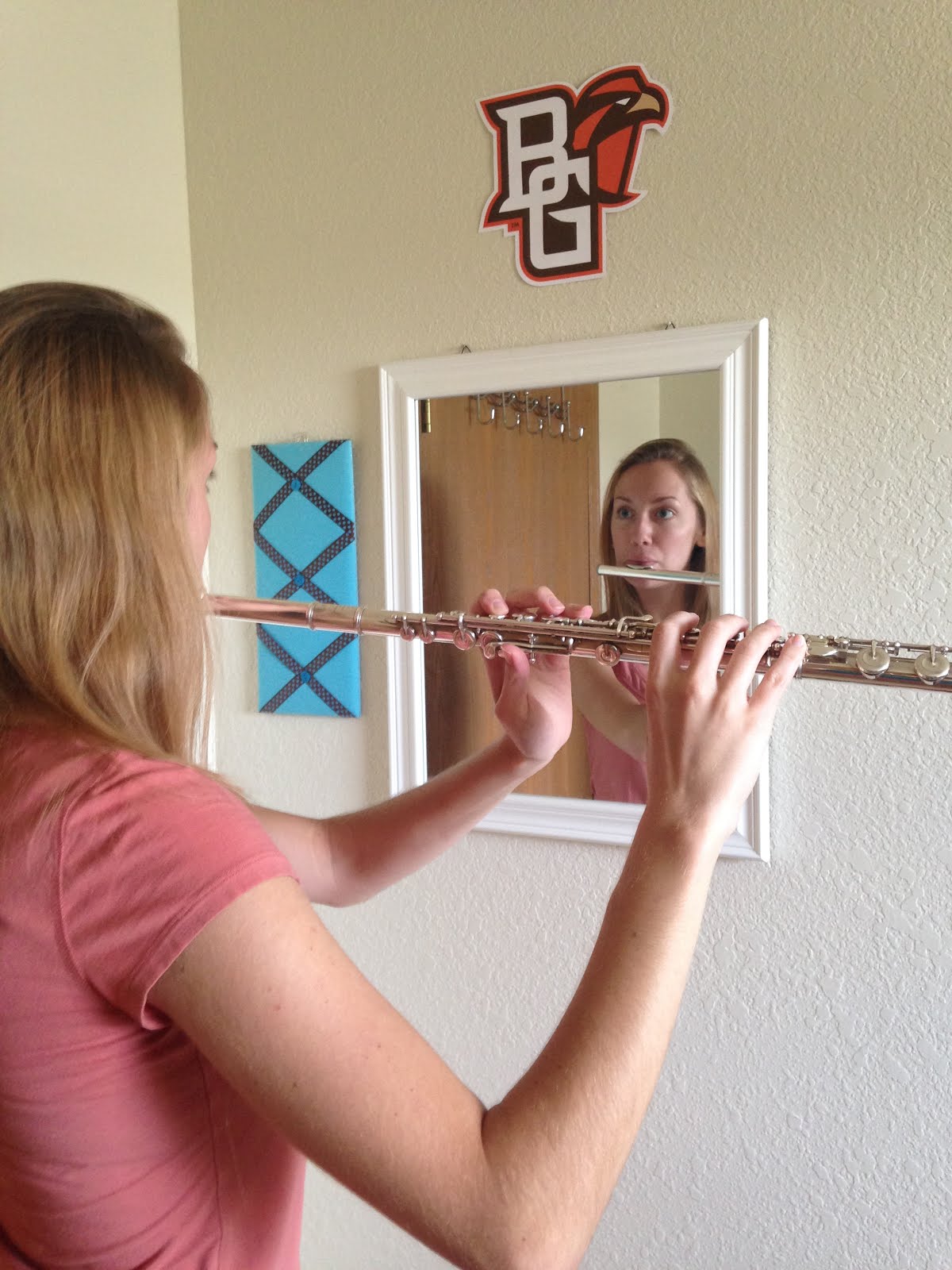
6. Practice in front of a mirror.
Check your frame and movement in the mirror.
Young flutist Kim Lewis checks her embouchure.
Looking in a mirror doesn’t have to be about vanity or egotism. It’s practical. Gyms and practice rooms alike have mirrors for its users. In the practice room, I generally saw people scrutinizing every movement of their lips or fingers, checking the positioning of their instrument and the positioning of their bodies and feet. At the gym, many people avoid the mirrors, but it’s important to check that we aren’t doing any extra movements unconsciously. Don’t worry about the girls trying to make their messy buns even messier or the bros who like to look at themselves flex. You know you’re doing your best, and with the mirror there to help you, you’re already a step ahead and gaining confidence.
7. Remember our heroes.
Mickey
Mantle and his injury
David Vining and his book What Every
Trombonist Needs to Know about the Body
Like a young baseball player admires athletes like Mickey Mantle who recovered from serious physical injuries, musicians have the same heroes. David Vining is a professional trombonist who overcame embouchure dystonia, which makes the muscles in the jaw and lips involuntarily contract, making it impossible for him to play his trombone at the time. He is currently still playing and teaching the trombone and has also written several helpful books for those who may be having similar struggles. In fitness and music, it’s incredibly easy to become discouraged. BUT, just remember one of the reasons we even do what we do, whether it’s playing soccer for a church team, working on our BOSU®, singing opera, or playing the tuba, is that we understand there is always a potential to get better at something we enjoy. And we bravely take that risk.
Janice Martin, Aerial Violinist
Have a fitness tip? We'd love to hear more tips you have to offer! Leave a comment or email melaniesmith62699@gmail.com.
This entry was contributed by Shannon Bolen, a Public Relations and Marketing intern at Hedstrom - Ball, Bounce and Sport. She recently graduated from Bowling Green State University in music education and currently listens to Matt and Kim in her car.


 It is easy to forget about stretching or choose to skip stretching as a way to shorten workout time. Skipping your stretching might save you time in the short term, but it leads to a higher chance of pulled muscles or other injuries that could hinder you from training or exercising. Taking shortcuts at the expense of stretching is not the road you want to take.